
 |
 |
 |
|
Il Forum sulle Culture Alimentari Mediterranee legalmente è un programma dI Plexus International Forum APS ETS, Associazione di promozione sociale, con sede a Sorano (GR). Presidente, Sandro Dernini
COMITATO TECNICO SCIENTIFICO
- Coordinatore, Sandro Dernini, Presidente, Plexus International Forum
- Roberto Capone, Amministratore Principale, Focal Point, Sistemi Alimentari Sostenibili e Dieta Mediterranea, CIHEAM Parigi
- Roberto Carcangiu, Presidente, Associazione Professionale Cuochi Italiani, APCI
-
Daniele Comelli, Creative Director, Forum sulle Culture Alimentari Mediterranee
-
Parviz Koohafkan, Presidente, World Agricultural Heritage Forum (WAHF)
- Flavio Paoletti, Coordinatore Scientifico, Distretto Biologico MET -Maremma Etrusca e Monti della Tolfa
Nel 2003, l’iniziativa del Forum sulle Culture Alimentari Mediterranee nasce come Rete EuroMediterranea sulle Culture Alimentari, nell’ambito del Secondo Forum EuroMediterraneo “Dialoghi tra le Civiltà del Mediterraneo sulla Sicurezza Alimentare. Il Ruolo della Cultura Alimentare per uno Sviluppo Rurale Sostenibile” tenutosi a Corigliano Calabro (Cosenza), organizzato dalla Fondazione Universitas Italica, In occasione del Semestre Italiano di Presidenza del Consiglio dell’Unione Europea, sotto l’Alto Patronato del Presidente della Repubblica, e il Patrocinio della Presidenza del Consiglio dei Ministri, il Patrocinio del Ministero delle Politiche Agricole e Forestali, la Rappresentanza in Italia della Commissione Europea, e il patrocinio della Presidenza della Giunta Regione Calabria.
Nel 2005, in occasione dell’Anno 2005 del Mediterraneo, sotto l’Alto Patronato del Presidente della Repubblica, del Ministero degli Affari Esteri, del Ministero dell’Agricultura, la Rappresentanza in Italia della Commissione Europea, la Rete EuroMediterranea sulle Culture Alimentari, la Rete Euromediterranea sulle Culture Alimentari ha organizzato con l’Istituto di Scienza di Scienza dell’Alimentazione dell’Università La Sapienza di Roma , il Terzo Forum EuroMed “Dialoghi tra Civiltà e Popoli del Mediterraneo: Le Culture del Cibo”, con la collaborazione del CIHEAM Bari e l’International Commission on the Anthropology of Food, tenutosi presso il rettorato dell’Università La Sapienza di Roma. A conclusione è stato emesso “L'Appello di Roma per un'Azione Comune sull'Alimentazione nel Mediterraneo”.
Come risultato nel 2006, fu istituito dall’Università di Roma La Sapienza, Università di Las Palmas de Gran Canaria, Università di Parma, Università La Tuscia’ e l’Università del Mediterraneo Cosenza, il Centro Internazionale Interdipartimentale di Studi sulle Culture Alimentari (CIISCAM), con sede amministrativa presso La Sapienza Università di Roma.
Nel 2009, la Rete EuroMediterranea sulle Culture Alimentari diventa l’attuale Forum sulle Culture Alimentari Mediterranee. Partecipa all’organizzazione della conferenza internazionale “La Dieta Mediterranea Oggi: Un Modello di Dieta Sostenibile”, organizzata dal Centro Interuniversitario Internazionale sulle Culture Alimentari (CIISCAM) a Parma con la collaborazione dell’Istituto di Scienza di Scienza dell’Alimentazione dell’Università La Sapienza di Roma, Istituto Nazionale della Nutrizione (INRAN), FAO, CIHEAM Bari e Bioversity International.
Come risultato della Terza Conferenza CIISCAM, fu organizzato nel 2010 da FAO e Bioversity International il Simposio Scientifico Internazionale “Sustainable diets and biodiversity: United against hunger” (Diete sostenibili e biodiversità: uniti contro la fame). A conclusione fu raggiunto un consenso sulla definizione di “diete sostenibili” . Nell’ambito del programma del Simposio un'intera sessione fu dedicata alla dieta mediterranea come esempio di dieta sostenibile, concludendosi con una proposta per la stesura di un codice di condotta per le diete sostenibili.
Nel 2010, il Forum ha partecipato all’organizzazione, con FAO, CIISCAM, INRAN, ENEA e COOP, del talk show “BIODIVERSITÀ? Cibo Sostenibile per Tutti: La Dieta Mediterranea un esempio di Dieta Sostenibile”, organizzato al Parco della Musica di Roma, nell'ambito della Settimana della Biodiversità.
Nel 2011, durante il Workshop Internazionale FAO/CIHEAM “Guidelines for the Sustainability of the Mediterranean Diet” (Linee guida per la sostenibilità della dieta mediterranea), presso il CIHEAM di Bari, è stato avviato uno studio di caso congiunto per valutare la sostenibilità della dieta mediterranea nella regione del Mediterraneo, considerando la sua multidimensionalità e i suoi impatti su salute e nutrizione, ambiente (inclusa la biodiversità), economia e fattori socio-culturali.
Nel 2011, il Forum ha partecipato all’elaborazione della revisione della Piramide della Dieta Mediterranea insieme a molte altre istituzioni internazionali e pubblicato su Public Health Nutrition (Mediterranean diet pyramid today. Science and cultural updates. Public Health Nutrition, 14(12A), 2274-2284.
Nel maggio 2015, il Forum ha partecipato all’organizzazione, con CNR, ENEA, CIHEAM Bari e CRA (Ex INRAN), il Convegno Internazionale “La Dieta Mediterranea esiste ancora? Nutrizione-Salute-Qualità-Sostenibilità-Innovazione-Evoluzione", all'EXPO di Milano.
Come risultato è stata emessa dal CIHEAM la Chiamata MEDDIET EXPO 2015- Tempo di Agire Ora, sottoscritta da oltre 80 istituzioni nazionali ed internazionali.
A Luglio 2025, sempre nell’ambito EXPO, considerando che le giovani generazioni costituiscono la maggioranza della popolazione nei paesi del Mediterraneo meridionale e orientale, CIHEAM, Forum e IFMeD, in collaborazione con ENEA, hanno presentato in incontro congiunto il progetto dell’installazione della piramide Med Diet 4.0, concepita come progetto di campagna itinerante di educazione e comunicazione rivolta ai giovani, per promuovere i molteplici benefici sostenibili della Dieta Mediterranea ai fini della sua rivitalizzazione, come uno stile di vita alimentare contemporaneo, attivo, diversificato, sostenibile e sano, in equilibrio con la persona e la natura. Nel agosto 2015, nell'ambito dell'Estate Romana, al Gazometro di Roma fu costruita l'installazione della Med Diet 4.0 all'interno di un drome geodesico, rappresentante il cosmo,
Nel 2016, il Forum ha collaborato all’organizzazione a Milano della Prima Conferenza Mondiale sulla Dieta Mediterranea "Rivitalizzazione della Dieta Mediterranea: Da un Modello Alimentare Sano a uno Stile di Vita Mediterraneo Sano e Sostenibile" organizzata a dall’International Foundation of Mediterranean Diet (IFMED), in collaborazione con CIHEAM Bari, la Federazione delle Società Europee di Nutrizione(FENS) e la collaborazione tecnica della FAO. A conclusione è stata emessa la “Chiamata per la Revitalizazione della Dieta Mediterranea”, sottoscritta da 37 società scientifiche, istituti di ricerca e organizzazioni nazionali e internazionali.
Nel 2019, il Forum ha organizzato con il CIHEAM Bari la Seconda Conferenza Mondiale sulla Rivitalizzazione della Dieta Mediterranea “Strategie verso Sistemi Alimentari più Sostenibili nel Mediterraneo. La Dieta Mediterranea come Volano per Collegare Consumi e Produzioni in modo sostenibile e salutare”, come One Planet Sustainable Food Systems Programme affiliated project, con il patrocinio del Ministero degli Affari Esteri e della Cooperazione Internazionale, Ministero della Salute, Ministero per le Politiche Agricole, Forestali e del Turismo, Regione Siciliana, UfM (Unione per il Mediterraneo) e CIHEAM, in collaborazione con CNR, CREA, ENEA e la collaborazione tecnica della FAO.
Come risultato della Seconda Conferenza, CIHEAM, FAO e UfM, a settembre 2010, in una riunione alla FAO, avviano lo sviluppo congiunto della SFS-MED Platform, come iniziativa multistakeholder per sistemi alimentari sostenibili nel mediterraneo. Viene insediato un Coordination Desk costuito dai Focal Points di ogni istituzione e coordinata volontariamente dal Presidente del Forum.
Nel 2022, il Forum ha collaborato all’organizzazione della Terza Conferenza Mondiale sulla Rivitalizzazione della Dieta Mediterranea “Cambio di Rotta verso Sistemi Alimentari più Sostenibili e Resilienti nei Paesi Mediterranei. La Dieta Mediterranea come Risorsa Strategica per Accellerare l'Agenda 2030 nella Regione”, organizzata dal CIHEAM Bari, in occasione del 60mo Anniversario del CIHEAM, con il patrocinio del Ministero degli Esteri e della Cooperazione Internazionale, Ministero delle Politiche Agricole Alimentari e Forestali, Ministero della Transizione Ecologica, Ministero della Salute, Regione Puglia, Comune di Bari. Con la collaborazione tecnica della FAO e la collaborazione di PRIMA Foundation, FENS (European Federation of Nutrition Societies), IFMeD (International Foundation of the Mediterranean Diet), CREA, CNR, ENEA, LINK2007 Cooperazione in Rete
Come side event della Conferenza, il Forum, con Plexus International Forum Onlus, ha organizzato “La Ristorazione Collettiva come Strumento culturale per promuovere la Dieta Mediterranea.”
Nel 2023, come risultato della terza Conferenza, viene costituita tra FENS, IUNS e il CIHEAM Bari, la Med Diet Task Force con lo scopo di tracciare il percorso per creare, valutare e implementare un quadro comune per un nuovo Modello Alimentare Mediterraneo per il XXI secolo, attraverso:
i) la (ri)definizione della Dieta Mediterranea appropriata per il XXI secolo; (ii) il raggiungimento di un consenso sugli elementi necessari per misurare l'aderenza alla Dieta Mediterranea (MedDiet) e, se possibile, lo sviluppo di un indice unico; (iii) la stesura di un codice di condotta volontario con raccomandazioni per i diversi settori (produttori primari, industria alimentare, salute, ambiente, ristorazione e consumatori, ecc.) per migliorare l'aderenza alle diete mediterranee sostenibili, utilizzando un approccio basato sui diritti, fondato sulla tradizione, rispettoso della biodiversità e degli ecosistemi e coerente con gli Obiettivi di Sviluppo Sostenibile.
Sempre a seguito della Terza Conferenza, il Forum organizza nel 2023 con il CIHEAM Bari, l’Unita di Ricerca in Scienza dell’Alimentazione e Nutrizione Umana dell’Università Sapienza di Roma, RistoCloud e R.C Food Consulting, il convegno“La Ristorazione Collettiva come Strumento Culturale per Promuovere la Dieta Mediterranea”, tenutosi al Palazzo Ferrajoli a Roma.
A seguito viene steso un accordo quadro tra il CIHEAM Bari e Plexus International Forum Onlus, a cui amministrativamente fa legalmente riferimento il Forum sulle Culture Alimentari Mediterranee. Gli obbiettivi erano: 1) favorire lo sviluppo e la realizzazione di programmi comuni rivolti ad una campagna di comunicazione triennale sulla valorizzazione della ristorazione collettiva italiana rivolta alla rivitalizzazione della dieta Mediterranea, attraverso le attività concordate; 2) Promuovere la Dieta Mediterranea attraverso attività rivolte a valorizzare la dimensione culturale del cibo attraverso la ristorazione italiana rivolta ad una migliore conoscenza dei prodotti dei territori; 3). Promuovere una nuova percezione della dieta Mediterranea attraverso l’approccio MED DIET 4.0 che valorizza contemporaneamente i molteplici benefici sostenibili della dieta Mediterranea; 4) Attivare una campagna di comunizazione, partendo dall’Italia, per rivitalizzare la dieta Mediterranea come un stile di vita contemporaneo, sano e sostenibile, in armonia con la natura.
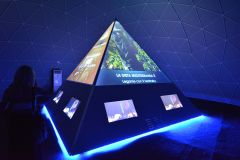

MED DIET 4.0 PYRAMID INSTALLATION
Nell agosto 2025, il Forum partecipa a Parigi al IUNS-ICN -23mo International Congress of Nutrition e diventa membro della nuova costituita IUNS Task Force sulle "Diete Territoriaii"
ENGLISH
The Forum is an operative programme of PLEXUS INTERNATIONAL FORUM APS ETS
In 2003, the initiative of the Forum on Mediterranean Food Cultures was born as the Euro-Mediterranean Network on Food Cultures, within the framework of the Second Euro-Mediterranean Forum "Dialogues between Civilizations of the Mediterranean on Food Security. The Role of Food Culture for Sustainable Rural Development," held in Corigliano Calabro (Cosenza). It was organized by the Universitas Italica Foundation on the occasion of the Italian Presidency of the Council of the European Union, under the High Patronage of the President of the Republic, and the Patronage of the Presidency of the Council of Ministers, the Ministry of Agricultural and Forestry Policies, the European Commission Representation in Italy, and the Presidency of the Calabria Regional Council.
In 2005, on the occasion of the 2005 Year of the Mediterranean, under the High Patronage of the President of the Republic, the Ministry of Foreign Affairs, the Ministry of Agriculture, and the European Commission Representation in Italy, the Euro-Mediterranean Network on Food Cultures organized, together with the Institute of Food Science of Sapienza University of Rome, the Third EuroMed Forum "Dialogues between Civilizations and Peoples of the Mediterranean: Food Cultures." This was held at the Rectorate of Sapienza University of Rome with the collaboration of CIHEAM Bari and the International Commission on the Anthropology of Food. At the conclusion, the "Rome Appeal for a Common Action on Food in the Mediterranean" was issued.
As a result, in 2006, the International Interdepartmental Center for Studies on Food Cultures (CIISCAM) was established by Sapienza University of Rome, the University of Las Palmas de Gran Canaria, the University of Parma, Tuscia University, and the University of the Mediterranean (Cosenza), with its administrative headquarters at Sapienza University of Rome.
In 2009, the Euro-Mediterranean Network on Food Cultures became the current Forum on Mediterranean Food Cultures. It participated in the organization of the international conference "The Mediterranean Diet Today: A Model of Sustainable Diet," organized by the International Interuniversity Center on Food Cultures (CIISCAM) in Parma with the collaboration of the Institute of Food Science of Sapienza University of Rome, the National Institute of Nutrition (INRAN), FAO, CIHEAM Bari, and Bioversity International.
As a result of the Third CIISCAM Conference, the International Scientific Symposium “Sustainable diets and biodiversity: United against hunger” was organized in 2010 by FAO and Bioversity International. At the conclusion, a consensus was reached on the definition of “sustainable diets.” Within the Symposium program, an entire session was devoted to the Mediterranean diet as an example of a sustainable diet, closing with a proposal for drafting a code of conduct for sustainable diets.
In 2010, the Forum participated in the organization, with FAO, CIISCAM, INRAN, ENEA, and COOP, of the talk show “BIODIVERSITY? Sustainable Food for All: The Mediterranean Diet an example of Sustainable Diet,” organized at the Parco della Musica in Rome, as part of Biodiversity Week.
In 2011, during the FAO/CIHEAM International Workshop “Guidelines for the Sustainability of the Mediterranean Diet,” at CIHEAM-Bari, a joint case study was started to assess the sustainability of the Mediterranean diet in the Mediterranean region, considering its multi-dimensions and impacts on health and nutrition, environment (including biodiversity), economy, and socio–cultural factors.
In 2011, the Forum participated in the development of the revision of the Mediterranean Diet Pyramid together with many other international institutions, published in Public Health Nutrition ("Mediterranean diet pyramid today. Science and cultural updates." Public Health Nutrition, 14(12A), 2274-2284).
2014, Sandro Dernini, president of Forum create with Lluis Serra Majerm-former President of the Mediterranean Diet Foundationin Barcelona, the International Foundation of the Mediterranean Diet-IFMeD legally based in London.
In May 2015, the Forum participated in organizing, with CNR, ENEA, CIHEAM Bari, and CRA (formerly INRAN), the International Conference “Does the Mediterranean Diet still exist? Nutrition-Health-Quality-Sustainability-Innovation-Evolution,” at the Milan EXPO. As a result, the MEDDIET EXPO 2015 Call - Time to Act Now was issued by CIHEAM and endorsed by over 80 national and international institutions.
In July 2015, again within the EXPO framework, considering that young generations constitute the majority of the population in Southern and Eastern Mediterranean countries, CIHEAM, the Forum, and IFMeD, in collaboration with ENEA, presented the project for the Med Diet 4.0 pyramid installation in a joint meeting. Conceived as a traveling education and communication campaign project aimed at young people, it sought to promote the multiple sustainable benefits of the Mediterranean Diet for its revitalization as a contemporary, active, diversified, sustainable, and healthy lifestyle, in balance with the person and nature. In August 2015, as part of the Estate Romana (Roman Summer) festival, the Med Diet 4.0 installation was built at the Gazometro in Rome inside a geodesic dome representing the cosmos.
In 2016, the Forum collaborated on the organization in Milan of the First World Conference on the Mediterranean Diet "Revitalizing the Mediterranean Diet: From a Healthy Dietary Pattern to a Healthy Mediterranean Sustainable Lifestyle," organized by the International Foundation of Mediterranean Diet (IFMeD), in collaboration with CIHEAM Bari, the Federation of European Nutrition Societies (FENS), and the technical collaboration of FAO. At the conclusion, the “Call for Action on the Revitalization of the Mediterranean Diet” was issued, endorsed by 37 scientific societies, research institutes, and national and international organizations.
In 2019, the Forum organized with CIHEAM Bari the Second World Conference on the Revitalization of the Mediterranean Diet "Strategies towards more Sustainable Food Systems in the Mediterranean. The Mediterranean Diet as a Lever to Bridge Consumption and Production in a Sustainable and Healthy Way," as a One Planet Sustainable Food Systems Programme affiliated project. It was held under the patronage of the Ministry of Foreign Affairs and International Cooperation, the Ministry of Health, the Ministry of Agricultural, Food, Forestry and Tourism Policies, the Sicilian Region, the UfM (Union for the Mediterranean), and CIHEAM, in collaboration with CNR, CREA, ENEA, and the technical collaboration of FAO.
As a result of the Second Conference, CIHEAM, FAO, and UfM, in September [2019/2020], at a meeting at FAO, launched the joint development of the SFS-MED Platform, as a multi-stakeholder initiative for sustainable food systems in the Mediterranean. A Coordination Desk was established, consisting of Focal Points from each institution and voluntarily coordinated by the President of the Forum.
In 2022, the Forum collaborated on the organization of the Third World Conference on the Revitalization of the Mediterranean Diet "Change of Course towards more Sustainable and Resilient Food Systems in Mediterranean Countries. The Mediterranean Diet as a Strategic Resource to Accelerate the 2030 Agenda in the Region," organized by CIHEAM Bari on the occasion of CIHEAM's 60th Anniversary. It was held under the patronage of the Ministry of Foreign Affairs and International Cooperation, the Ministry of Agricultural, Food and Forestry Policies, the Ministry of Ecological Transition, the Ministry of Health, the Puglia Region, and the Municipality of Bari, with the technical collaboration of FAO and the collaboration of the PRIMA Foundation, FENS, IFMeD, CREA, CNR, ENEA, and LINK2007 Cooperazione in Rete. As a side event of the Conference, the Forum, with Plexus International Forum Onlus, organized “Collective Catering as a Cultural Tool to Promote the Mediterranean Diet.”
In 2023, as a result of the Third Conference, the Med Diet Task Force was established between FENS, IUNS, and CIHEAM Bari with the aim of tracing the path for creating, evaluating, and implementing a common framework for a new Mediterranean Dietary Pattern for the 21st Century, by: i) (re-)defining the Mediterranean Diet appropriate for the 21st century; ii) reaching consensus on the elements required to measure adherence to the MedDiet, and, if possible, developing a single index; iii) drafting a voluntary code of conduct with recommendations for different sectors (primary producers, food industry, health, environment, food service, and consumers, etc.) to improve adherence to sustainable Mediterranean Diets, using a rights-based approach, grounded in tradition, respectful of biodiversity and ecosystems, and consistent with Sustainable Development Goals.
Also following the Third Conference, in 2023 the Forum organized with CIHEAM Bari, the Research Unit in Food Science and Human Nutrition of Sapienza University of Rome, RistoCloud, and R.C Food Consulting, the conference “Collective Catering as a Cultural Tool to Promote the Mediterranean Diet,” held at Palazzo Ferrajoli in Rome.
Subsequently, a framework agreement was drawn up between CIHEAM Bari and Plexus International Forum Onlus (to which the Forum on Mediterranean Food Cultures legally and administratively refers). The objectives were:
- To foster the development and implementation of common programs aimed at a three-year communication campaign on the enhancement of Italian collective catering aimed at the revitalization of the Mediterranean diet, through agreed activities;
- To promote the Mediterranean Diet through activities aimed at valorizing the cultural dimension of food through Italian catering, aimed at better knowledge of territorial products;
- To promote a new perception of the Mediterranean diet through the MED DIET 4.0 approach, which simultaneously valorizes the multiple sustainable benefits of the Mediterranean diet;
- To activate a communication campaign, starting from Italy, to revitalize the Mediterranean diet as a contemporary, healthy, and sustainable lifestyle, in harmony with nature.
MED DIET 4.0 INSTALLATION, ROME 2015
In August 2025, the Forum participated in Paris at the IUNS-ICN - 23rd International Congress of Nutrition and became member of the new IUNS Task Force on Territorial Diets.


 Feed RSS