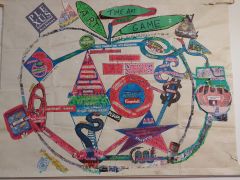
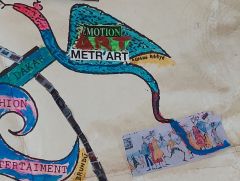
17/01/2026 - THE ARTIST IN THE FIRST PERSON: PLEXUS 23S aka Sandro Dernini, blog 23s 26.01.2026
Let me to introduce myself in the first person,
I am Plexus 23s , aka Sandro Dernini

I have a double identity, I am an artist, as well as, I am a scientist
.

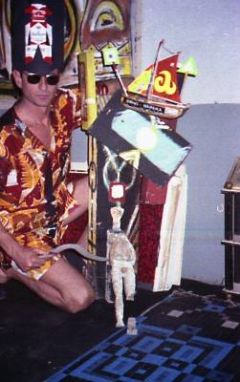
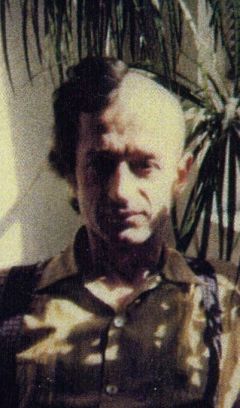
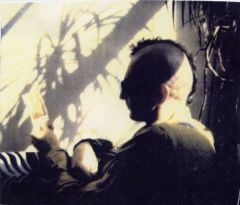
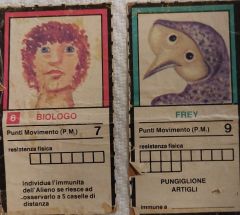
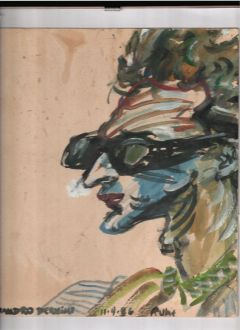
In 1974, I earned my degree in Biological Science from the University of Cagliari (Sardinia), and in 1997, I obtained my Ph.D. in Art Education from New York University.
Since early 80s, I began to intertwine my artistic pursuits with a rich exploration of cultural heritage and community resilience, laying the groundwork for the ongoing legacy of Plexus and my commitment to fostering creative dialogues.
Since the early 90s, I have been advocating for a transdisciplinary dialogue among international scholars across various fields, exploring the connections between well-being, the Mediterranean diet, sustainable diets, and food sustainability. I have published numerous peer-reviewed articles and books and organized international conferences and projects with the United Nations and intergovernmental organizations. Notably, I have organized three World Conferences on the Revitalization of the Mediterranean Diet in Milan (2016), Palermo (2019), and Bari (2022).
My cultural identity is also dual; I am Sardo (from Sardinia), where I was born, and Italian. While my nationality is Italian, my cultural roots are deeply connected to the Nuragic civilization, which thrived during the Bronze Age in Sardinia.
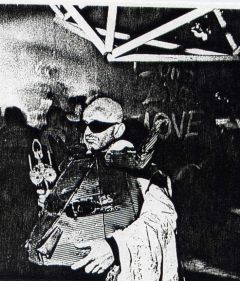
In 1974, I moved to Rome as young university researcher. In 1976, I co-founded Spazio A in Cagliari, an experimental multi-arts space with collaborators Marilisa Piga, Pietro Zambelli, Piernicola Cocco, Annamaria Pillosu, Sandro Carboni, and Paolo Cossu. Spazio A was affiliated with L.I.A.C.A. (Lega Italiana Associazioni Culturali Alternative), active in defending freedoms of expression and association against police repression targeting alternative cultural spaces in Italy.
In the fall of 1978, during my role in the LIACA National Secretariat in Rome, with Giovanna Ducrot and Massimo Vincenti, I organized a provocative cultural auction at Il Cielo in Trastevere, where LIACA members sold themselves as slaves for 24 hours. This radical performance aimed to draw attention to police repression against freedoms of association and expression in Italy during that politically oppressive era. The L.I.A.C.A. also played a fundamental role in founding “Estate Romana,” a cultural program initiated by the City of Rome’s Cultural Affairs Commissioner, Renato Nicolini.
In January 1980, I relocated to New York, where I, along with Luigi Ballerini, director of the NYU Italian Studies Program, established the Center for Italian Contemporary Culture at NYU. We launched a program called “The Artist in the First Person,” which served as a platform for contemporary Italian artists in New York to connect with various NYU departments in theater, cinema, dance, and visual arts.
In the fall of 1981, the foundational concept of Plexus emerged during a gathering in my kitchen on East 6th Street in Manhattan with Giancarlo Schiaffini and musicians Antonello Neri and Massimo Cohen. Plexus was envisioned as an independent multi-arts space allowing artists to create without intermediaries like critics or dealers. My collaboration with Giancarlo Schiaffini, which began in the mid-70s at Spazio A, continued strongly.
In early 1982, I accepted an invitation from architects Roberto Brambilla and Gianni Longo to create a new cultural center in a 7000 sq. ft. loft at 516 West 25th Street in Chelsea, part of a larger development. Richard Flood, then managing editor of Art Forum Magazine, joined our initiative. After conducting market research, we decided to name it Plexus.
On June 13, 1982, we inaugurated the loft with a happening modern sacrifice party dedicated to the goddess Kali and the modern deities of urban life, marking the future of Plexus International Center for Urban Resources Inc., a non-profit organization. Shortly after, Richard Flood departed, realizing Brambilla and Longo had no intention of supporting the necessary renovations to start Plexus activities. To continue, I enlisted John Hanti and Louis Tropea, two club organizers, to help with renovations in exchange for operating a nightclub there.
On December 31, 1982, we opened the club with "The Garden of Fuzz," a successful New Year’s Eve party. However, due to neighborhood complaints, the club activities were halted the next day, and Hanti and Tropea left. On April 19, 1983, the Plexus performance space opened with the world premiere of “Turtle Dreams” by Meredith Monk, showcased as a multimedia cabaret performance. Despite a busy spring program, Brambilla and Longo ended their partnership, requesting an exorbitant monthly rent of $2500 to continue operations. I took the financial risk and became the legal representative of Plexus International Center for Urban Resources Inc.
I managed a dynamic program until March 1, 1984, when I was forcibly evicted from the performance space without notice, leaving me with significant debt and no place to go. Moving from one friend's place to another, I eventually met Brian Goodfellow, a painter and model, who introduced me to Mrs. Sarah Farley. Mrs. Farley was a charismatic leader of the homesteader community organization L.A.N.D. (Local Action for Neighborhood Development) in the Lower East Side, known for her commitment to community empowerment and her connection to the late Billie Holiday. She operated a thrift shop on the ground floor of a burned-out building at 523 East 6th Street, where local residents were fighting to reclaim their neighborhood.
Mrs. Farley invited me to live on the third floor of her building, which was sparsely furnished, lacking proper windows, water, or electricity. With the help of my journalist friend Giuseppe Sacchi, I converted the basement—filled with garbage—into a new community multi-arts space called The Shuttle Theatre.
During my time in the Lower East Side, I discovered the true meaning of community and developed a deeper connection to the resilient, multicultural identity of the area, while becoming more aware of my Sardinian heritage. On June 13, 1984, we officially opened The Shuttle Theatre in partnership with Brian Goodfellow and Karl Berger, the musical director of the Creative Music Foundation in Woodstock. Willoughby Sharp served as artistic director, and Julius Klein took on bartending duties.
Mikey Pinero, a renowned poet from the Lower East Side community, entrusted me with an Indian American statuette, a house protector of the Nuyorican Poets Café, which had been co-founded by Pinero and Miguel Algarin. This statuette became a symbol of The Shuttle and was featured on our membership cards.
The Shuttle quickly transformed into a unique space, frequented mostly by the artists who performed there. Our programming included a vibrant mix of jazz, poetry, dance, art exhibitions, and theater. In partnership with bassist William Parker, the collective Sound Unity launched a community music program, while Miguel Algarin curated a weekly poetry reading series. I revived the concept of “The Artist in the First Person” to create a new art program that allowed artists to act as curators.
On August 25, in front of The Shuttle Theatre, I organized “In Order to Survive,” a street event in collaboration with Sound Unity, the Nuyorican Poets Café, and L.A.N.D. The event aimed to raise awareness about the dire conditions faced by community artists in the Lower East Side. Prominent figures like Miguel Algarin, Billy Bang, William Parker, Alfa Diallo, Karl Berger, Jemeel Moondoc, and Roy Campbell performed, with Bruce Richard Nugent and Mrs. Farley presiding over the proceedings. Nugent was the last surviving artist from FIRE !!, a historic Black Renaissance magazine published in Harlem in 1926.
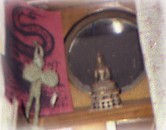
Shortly thereafter, renowned world musician Don Cherry, who was performing at The Shuttle, gifted me a small metal Buddha statuette he had brought from Tibet, in support of our mission during “In Order to Survive.”
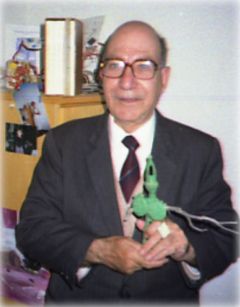
The following morning, I was awakened by Prof. Raimondo Demuro, an old friend of my father's from Sardinia, who had just arrived from our native island. Speaking only Italian and Sardinian, his unexpected arrival at my third-floor apartment—located in a dilapidated building in a rough neighborhood—felt almost mystical. He passionately spoke about the need to preserve our living traditions linked to the Nuragic culture of Sardinia, which dates back to around 1600 B.C. He shared stories about how our Nuragic ancestors constructed over 17,000 stone towers, known as nuraghes, across the island.
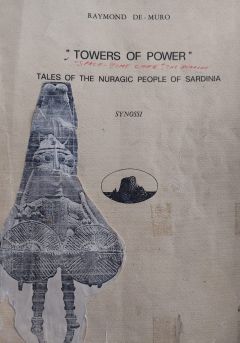
Prof. Demuro requested my assistance in finding a publisher for his book, "I Racconti della Nuraghelogia," which details ancient oral tales from the Nuragic culture. I was captivated by his descriptions of our forgotten heritage and introduced him to Stephen DiLauro, a playwright who frequented The Shuttle Theatre and had an interest in Robert Graves' theories on ancient traditions. Stephen agreed to write an English introduction for Demuro's book synopsis, titled “The Towers of Power,” which explored themes of synchronicity, UFOs, and a ‘cosmic net’—pondering whether the stone towers formed part of a vast interplanetary communication network of universal memory.
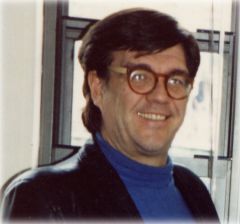
Stephen Di Lauro 1988
Steve liked it and wrote an introduction to the English De Muro's book synopsis, entitled “The Towers of Power”, about synchronicity, UFOs, and “cosmic net”, questioning if thousand stone towers of varying heights exit, as the remains of a bigger ancient network could be the center of an interplanetary communication network of a universal memory.
In this period, I started to re-organize Plexus as a community-based non profit organization by inviting Bruce Nuggent to be honorary chairperson and Sarah Farley and Mickey Pinero to act as vice chairpersons. In October, Plexus started again to operate at The Shuttle with a fall multi-arts program,
On 16 January1985, Angiola Churchill, co-director of the International Center for Advanced Studies in Art at New York University, and chairperson of the Department of Art and Art Education of New York University, invited me to give a lecture that I entitled The Artist in the First Person. I briefly introduced his experience as a cultural organizer, from Plexus performance space to The Shuttle Theatre. Then he left the podium by leaving the space to the artists, who have collaborated with me in the past, to perform in “the first person” their own presentation. It ended with a general feast when Gianni Villella, a socioligist friend of mine arrived with two plates of traditional “freselle” bread, with fresh tomatoes, hand made mozzarella and fresh olive and basil, creating an interactive art happening, with teacher, students, artists and audience, interacting together. After this lecture, Angiola Churchill offered me to join her Department as graduate assistant with a NYU grant for a Ph.D. study in my field of interest of “eating art”.
In 1985, I brought on board of my brother Carlo's boat Elisabeth, in the port of Carloforte, in the small island of San Pietro, off Sardinia, the Buddha statuette that Don Cherry gave me at the Shuttle Theatre, and I left there as commitment for the continuation of the voyage of the "In Order To Survive" Call.
On 13 June 1985, at CUANDO Cultural Civic Centre I conceived the Plexus art opera “Goya Time, 1985, New York”, with Butch Morris and Gretta Safarty, me and Butch Morris, was performed by more than 80 artists, among musicians, singers, poets, dancers, performers and actors.
On 17 July 1985, at CUANDO Cultural Civic Centre, I organized the Purgatorio Show ‘85, New York , Plexus art opera n.2m performed by 350 artists as a 3 hours exhibition open call for a future cultural community house in the Lower East Side, dedicated to Ralston Farina and to his dream to escape from time and gravity. It was finalized to draw more public attention on the Lower East Side gentrification leaving the community and artists without work and living places.
At the end of November 1985, the entire building at 523 East 6Th Street where was the Shuttle Theathre and where I was living, burned by a fire accident, exploded in my place on the 3rd floor. The entire building was closed by the Fire Department and I lost everything.
David Boyle, who was one of the most active participant in the Purgatorio Show and director of the Shock Troop Theatre, invited me to continue my Plexus effort within the Lower East Side community and to be guest in the studio, on 93 Avenue B, on the corner of East 6th Street, that he had with Joanee Freedom, a very active member of the Rainbow Family, who were also taking to develop in the ruined block a community garden initiative: The Avenue B Garden Project.
On 27 February 1986, at C.U.A.N.D.O., as a continuation of the open call of the Purgatorio Show 1985 for an International New York Cultural Community Art House, Plexus presented its art opera n.3, “Eve: Escape for Donna Purgatorio from 1986 Anno Domini by the Multinational Chain Gang of Dowtown New York”, created and produced collectively by all 220 artist participants.
On 18 February 1987, in New York, at the Patrizia Anichini Gallery, I performed
DO YOU THINK THAT IT IS POSSIBLE TO EAT ANDY WARHOL BY EATING A PLEXUS CAMPBOLL'S SOUP CAN?
as an aesthetic inquiry for my PhD course E90.2605 on Phenomenology and the Arts at New York University, directed by prof. David W. Ecker.
On June 30, 1987, in Rome, at the Theatre in Trastevere, my old L.I.A.C.A. place, I organized a press conference with Willem Brugman, Miguel Algarin, Arturo Lindsay, Maggie Reilly, Shalom Neuman, Gianni Villella, Paolo Maltese, Carlo Cusatelli, Giovanna Ducrot, Armando Soldaini, followed by an happening recall LIACA parade in the Trastevere street, to present the Plexus art co-opera Il Serpente di Pietra, as the first international art slave market show in modern art history, with more 160 artists as art slaves coming from 23 different countries, that was going to happen in Sardinia, at the megalithic sanctuary of Sa Itria in Gavoi, from 1 to 4 July.
There, at the center of Sardinia, the first Art Slaves Market Show as Plexus Art Co-Opera n.4 "The Serpent of Stone", was staged as continuation of the Plexus Art Operan.3 "Eve, Escape for Donna Purgatatorio from Anno Domini", held in 1986 in New York as a metaphoric art slaves boat art journey escaping from the New York Art World control.
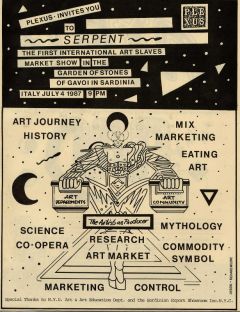
With more 160 artists as art slaves coming from 23 different countries, Il Serpente di Pietra was staged as four days of art and science, connected before internet existed to a scientists computer network by the Bruce Breland and Robert Dunn of the Dax Group of Carnegie Mellon and Franco Meloni of the University of Cagliari, as a multi-media fractal show dedicated to the Heinrich Hertz’s 100 years electromagnetic celebration for freedom in art communication.
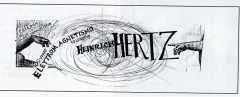
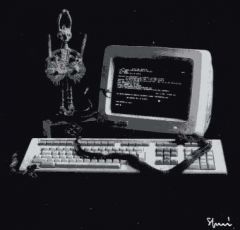
Photo Stefano Grassi
At the end, I performed the elimination of my image of artistic director of Plexus, expression of the pyramidal structure of the star system of the artworld, new contemporary form of slavery, with Assane Mbaye inviting all artists to go in 1988 to Dakar-Goree, as continuation of the Plexus art slaves voyage.
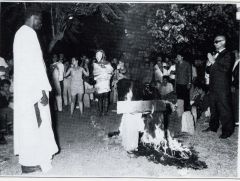
Burning my image of the Artistic Director of PLEXUS, Gavoi, Sardinai, 1987
After leaving Gavoi Sa Itria event, I went with Willem Brugman to Carloforte to carry my Nuraghic warrior on board of the Elisabeth boat with other records and relics from the Serpente di Pietra, to be placed next to the Don Cherry’s little Buddha statuette, for the continuation of the Plexus art journey.
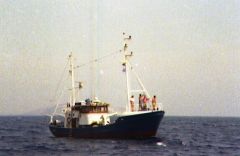

In early December 1987, before to go to Dakar, I moved to Carloforte to perform my “dematerialized” Nuraghic ritual art love journey in direction of Goree. inspired by the oral tales of the old Nuraghic people, reported to me by Prof. Raimondo Demuro, who were able to travel, in a dematerialised way, from one place to another one, through collective ritual performances travelling through time and space. Influenced by it, I started to perform my nuraghic ritual actions as a modern sacrifice towards the continuation of my Plexus art journey to fly in direction of Dakar.
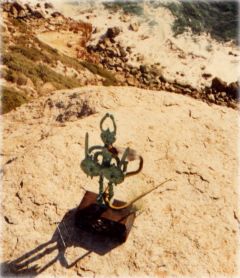
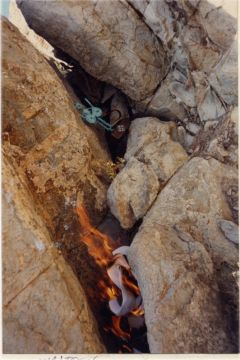
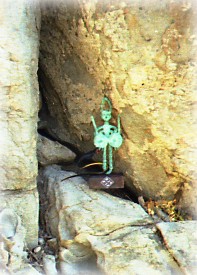
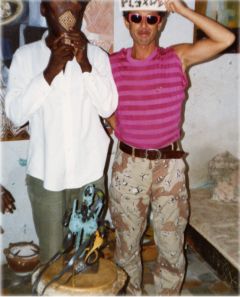
Few days after, I landed in the Medina of Dakar, at the house of the family of Assane and Kre MBaye, in rue 17 angle 8. Since then, I became very closed to all members of the MBaye family, managed by the two big sisters Awa and Marcel, with the help of Fatamata, Awa’s daughter. At Kre MBaye studio, I performed, with Langouste MBow, Kre, Assane, and other artists, the nuraghic ritual re-materialization of the Plexus Serpent Passport from Sardinia to the Medina of Dakar.
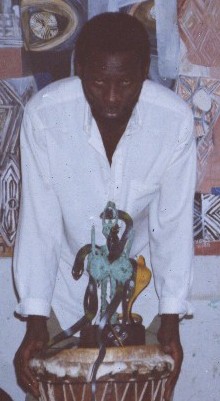
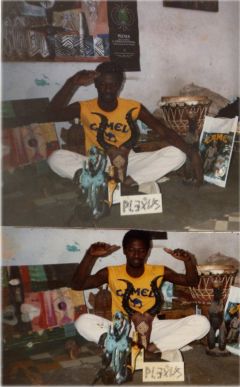
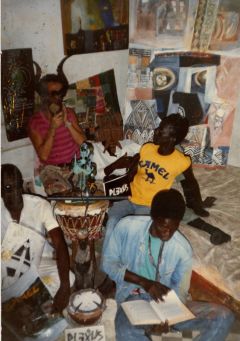
MY STORYLINE IN THE FIRST PERSON WILL CONTINUE SOON