www.plexusinternational.org
Do You Think it is Possible to Eat Andy Warhol by Eating an Campbell Soup Can? New York
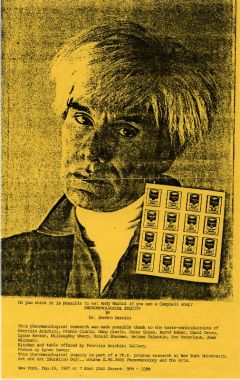
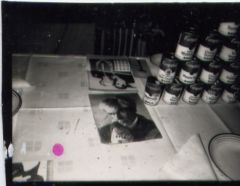
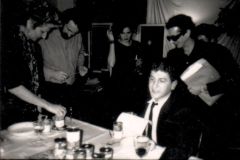
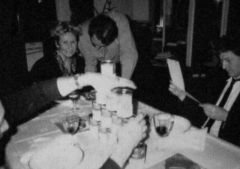
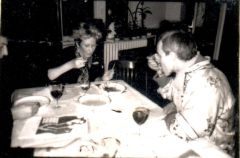
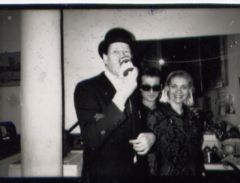
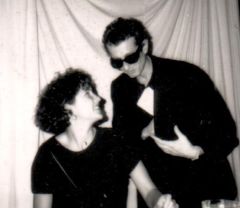
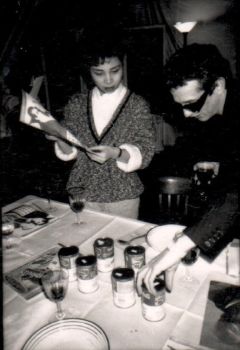
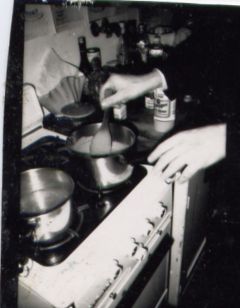
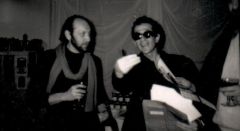
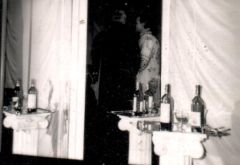
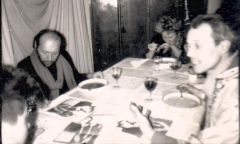
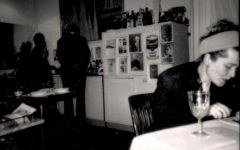
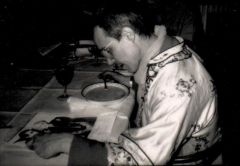
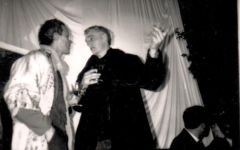
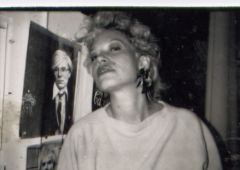
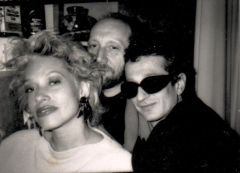
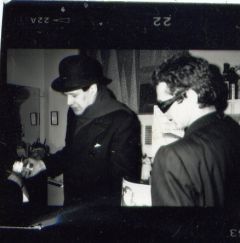
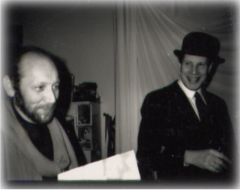
 On 18 February 1987, in New York, at the Patrizia Anichini Gallery, I RITUALLY performed

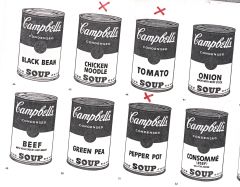
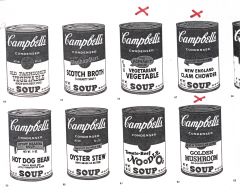
DO YOU THINK THAT IT IS POSSIBLE TO EAT ANDY WARHOL BY EATING A PLEXUS CAMPBOLL'S SOUP CAN?

as an aesthetic inquiry for my PhD course E90.2605 on Phenomenology and the Arts at New York University, directed by prof. David  W. Ecker


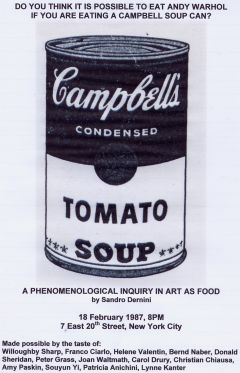
 On 18 February 1987, in New York, at the Patrizia Anichini Gallery, I RITUALLY performed

DO YOU THINK THAT IT IS POSSIBLE TO EAT ANDY WARHOL BY EATING A PLEXUS CAMPBOLL'S SOUP CAN?

as an aesthetic inquiry for my PhD course E90.2605 on Phenomenology and the Arts at New York University, directed by prof. David  W. Ecker


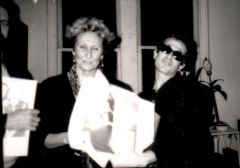
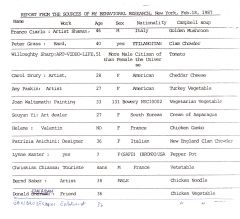
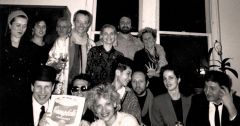
Invited artists were Willoughby Sharp, Helen Valentin, Bernd Naber, Franco Ciarlo, Donald Sheridan, Peter Grass, Lynne Kanter, Souyun Yi, Carol Drury, Amy Paskin, Christian Chiansa, and the host Patrizia Anichini.
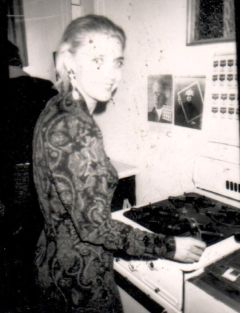


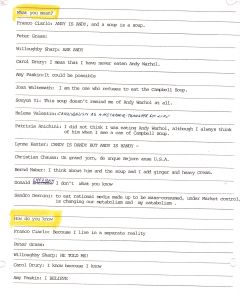
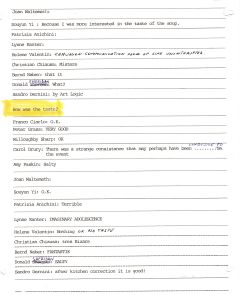
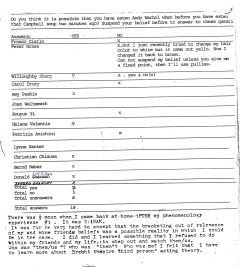
I prepared a questionnaire to be filled by participant artists after having cooked and eaten a Campbell's soup can. Seven questions I posed in the questionnaire, conceived for my phenomenological performance upon my NYU PhD course on Phenomenology and the Arts and my PhD reaserch study on "ART AS FOOD".   
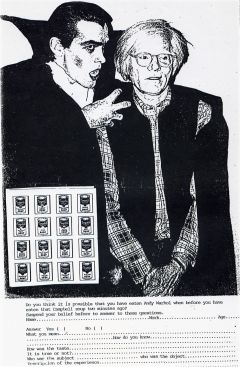
QUESTIONNAIRE

Do you think it is possible that you have eaten Andy Warhol when before you have eateen that Campbell soup two minutes ago?  

  1. Suspend your belief before to answer to these questions. Answer: yes or no?
  2. What you mean?
  3. How do you know?
  4. How was the taste?
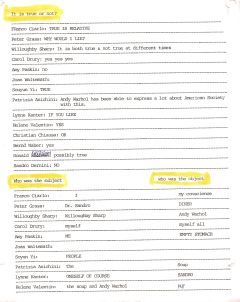
  5. Is it true or not?
  6. Who was the subject?  Who was the object?  

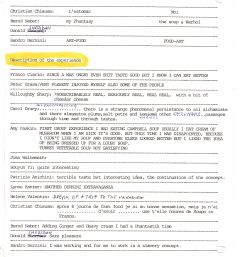
  7. Description of the experience


From the artist answers to the questionnaire, the majority of believed they “ate” Andy Warhol dematerialized. 


I prepared my phenomenological performance, by being inspired  for moving forward my NYU Ph.D inquiry on "ART AS FOOD",  by the symposium The Dematerialization of Art, organized the day after at New York University by Angiola Churchill and Jorge Glusberg, co-directors of ICASA (International Center for Advanced Studies in Art), where I was working as a graduate assistant of prof. Churchill, chair of the NYU Art and Art Education Dept.


"Heisenberg's Uncertainty Principle of 1907 with its recognition that the behaviour of the atom could not be predicted proposed a new reality that the artist has only begun to grapple with.  What is the status of art if a discernible reality no longer exists?

Advanced technology has vastly expanded the human sensorium. What results from this increase of information largely depends on the interpretative abilities of the artist.

Scientific breakthroughs have presented not just a new version of reality but also of time and space. 

What significance this will have for art cannot yet be said but we are clearly on the brink of the most extraordinary leap in human perception".

(From the brochure of  the Symposium on The Dematerialization of Art, International Center for Advanced Studies in Art, New York University, 1987)


Few nights after,  on 22 February, Andy Warhol died! 


At the opening of the Symposium, Lenny Horowitz and Stephen Di Lauro, two Plexus historical players, by reporting from the floor the Sandro's performance, questioned the panelist about this potential dematerialization of Andy Warhol into a Campbell's soup can.             


Stephen DiLauro 

 NYU, ICASA SYMPOSIUM TISCH AUDITORIUM, FEBRUARY 1987

“A Question to the Symposium on the Dematerialization of Art”

Art has its roots in ritual. We have only to look at the works of early shamans drawn on the walls of caves at Altamira and Lascaux. In addressing the idea of the dematerialization of art, aren’t we really taking about ritualistic art which cannot be repeated or preserved, setting aside for a moment the question of documentation, which is really a tool for raising capital. Take it a step further: the dematerialization of art is really ritual for the sake of ritual. Last night Sandro Dernini asked if when eating Campbell’s Soup, we are eating Andy Warhol—spoofing, if you will, the Christian communion ritual. This idea of concept of dematerialization as ritual is even further underscored in a performance, say, where 13 people gather to eat Campbell’s Soup. The soup has dematerialized into the stomachs of the participants and the gestures and words of those gathered have dematerialized into the air, not to be repeated again word for word, slurp for slurp. So the ritual dematerializes as it takes place. Dance, theatre—these stem from a need to ritualize, or make repeatable, certain words, movements, gestures. Another example, even more appropriate to the point I’m making raising this question with the panel, is the Plexus Art Operas, where hundreds of artists gather together to perform a theme. Dance, theatre, musical performance and visual arts are all combined here with the central idea of a modern sacrifice – sacrifice being an art ritual, of course. Bur the modern sacrifice of sacrifice, the end of ritual, really. So in talking about the dematerialization of art, aren’t we really talking about the demystification of ritual, the end of ritual. The impulse to include the audience, as in the happenings and the Living Theatre, is really the impulse of make shamans of us all, audience and artists alike. So, do you or do you not agree that the dematerialization of art is really art for the sake of demystifying, or even doing away with ritual, by making art? Whose Serpent? Who is the Serpent?                                                                                                                                           Stephen DiLauro

Nam June Paik, among the speakers, answered   believed possible that Andy Warhol had been dematerialized through the artist intentional act of eating his commodity art symbol.
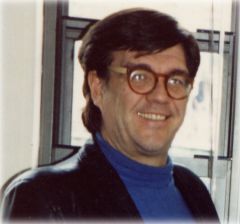
 

The panelists were Jean Baudrillard, Donald Kuspit, Vito Acconci, Nam June Paik, Judy Barry, Dennis Oppenheim, Billy Kluver, Nancy Holt, Paul Taylor, Bruce Breland, Flor Bex, Rene Berger, Eika Billeter, Alan Bowness, Julie Lawson, Hervè Fischer and George Chaikin. 


Hadamard Matrix Why it is Art

by George Chaikin, 1987

The Dematerialization of Art Symposium, ICASA International Advanced Studies in Art, New York University 1987


I’ve been asked to tell you why it’s art.  I’d like to say it’s art because I made it to be art, and leave it at that, but while that appeals to my ego, it doesn’t respond to your genuine inquiry.  Obviously, in some sense, it has failed as a work of art since it has not made its qualities self-evident.  I do not wish it to be obvious, but I certainly do not wish it to be obscurantist.  I wish to invite, even demand, examination, and that it reveals itself as examination proceeds, that this revelation be open ended, that it yield up more and more as examination grows deeper.  I’ve said it failed in some respects, but it has also succeeded.  For me, it continues to hold fascination, to reveal new sides of itself.

It’s art because it’s a drawing of an idea. The bimodality of the diagonals represents an effort to express the underlying duality of the elements in a form which gives equal weight to each mode. Other attempts using black and white, horizontal and vertical, plus and minus, or zero and one, failed in this respect. While this represents the best realization to date. I’m still working on new possibilities.  I find these diagonals too dry, too ascetic. (This is not typical of my drawings, which are usually rich in curves.)  I’d like to find a curvilinear realization which suitably expresses the idea.

It’s art because it’s magic.  It has a secret name, the knowledge of which gives the possessor exalted powers, power over nature. Its secret name is its algorithm, which reveals itself to be careful observer.  Therefore…

 it’s art because it knows its own name.. Since it knows its own name, it possesses magical powers, specifically the power of self-replication.  This means it may even come close to being alive.

It’s art because it is recursive.  I’ll bet you never heard this one before, but I’m sure you’ve encountered the concept.  It means that drawing contains its own reiteration at a different scale – this is fundamental to its algorithm – that it is defined in terms of itself on a different scale.

It’s art because it’s reflective.  Reflection is an extremely powerful action.  Reflect upon it.  The recursive algorithm involves three identical copies and one inversion. Both of these are reflective operations.

It’s art because I give it away.  I give it away because it is anidea, because yjay’s function of art, ti give ideas.  The versions I have giving away so far been too sparse, too thin.  I hope soon to do of these drawings containing more that one million lines, to make a million copies of it and give them away.  That’s a trillion lines.

It’s art because it was done in memory of Ralston Farina


THE PLEXUS CIRVILINEAR GEOMETRY OF CONSCIOUNESS

BY GEORGE CHAIKIN


On February 18 of 1987, in New York, at Patrizia Anichini’s Gallery, Sandro Dernini staged the performance Do you think is it possible to eat Andy Warhol if you are eating a Campbell soup? It was enthused by the symposium The Dematerialization of Art, organized the day after at New York University by Angiola Churchill and Jorge Glusberg, co-directors of ICASA (International Center for Advanced Studies in Art), in which Sandro Dernini collaborated as NYU graduate assistant. He conceptualized the performance as an inquiry for the NYU course Phenomenology and the Arts, conduced by David Ecker, that he was taking as student. 

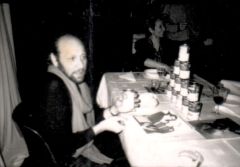
Willoughby Sharp, Helen Valentin, Bernd Naber, Franco Ciarlo, Donald Sheridan, Peter Grass, Lynne Kanter, Souyun Yi, Carol Drury, Amy Paskin, Christian Chiansa, and Patrizia Anichini were eaten a Campbell soup. Only Joan Waltmath refused to eat it. After eating, they answered to the following questionnaire for the NYU PhD’s phenomenological inquiry:  “Do you think it is possible that you have eaten Andy Warhol when two minutes ago you have eaten that Campbell soup?  Suspend your belief before to answer to these questions. Answer: yes or no? What you mean? How do you know? How was the taste? Is it true or not? Who was the subject?  Who was the object?  Description of the experience”

On the table, brochures of the NYU ICASA Dematerialization of Art Symposium were placed near the plates, as napkins, in order to be read during the digestion. From the analysis of the questionnaires, it came up that the majority of participants believed that they “ate” Andy Warhol dematerialized.

That night Andy Warhol pity died and everybody have been shocked about it.

The next day, at the symposium opening of ICASA Dematerialization of Art, Lenny Horowitz and Stephen DiLauro from the audience reported what had happen a day before questioning about the potential dematerialization of Andy Warhol.

The ICASA speakers were Jean Baudrillard, Donald Kuspit, Vito Acconci, Nam June Paik, Judy Barry, Dennis Oppenheim, Billy Kluver, Nancy Holt, Paul Taylor, Bruce Breland, Flor Bex, Rene Berger, Eika Billeter, Alan Bowness, Julie Lawson, Hervè Fischer and George Chaikin.. 

Nam June Paik believed possible that Andy Warhol had been dematerialized through the intentional act of eating his commodity art symbol.